History of Britain The AngloSaxons and the Vikings
AngloSaxon conquest of Britain. ⚔️ Fall of the Britons YouTube

Ethnonym. The Old English ethnonym Angul-Seaxan comes from the Latin Angli-Saxones and became the name of the peoples the English monk Bede called Angli around 730 and the British monk Gildas called Saxones around 530. Anglo-Saxon is a term that was rarely used by Anglo-Saxons themselves. [citation needed] It is likely they identified as ængli, Seaxe or, more probably, a local or tribal name.
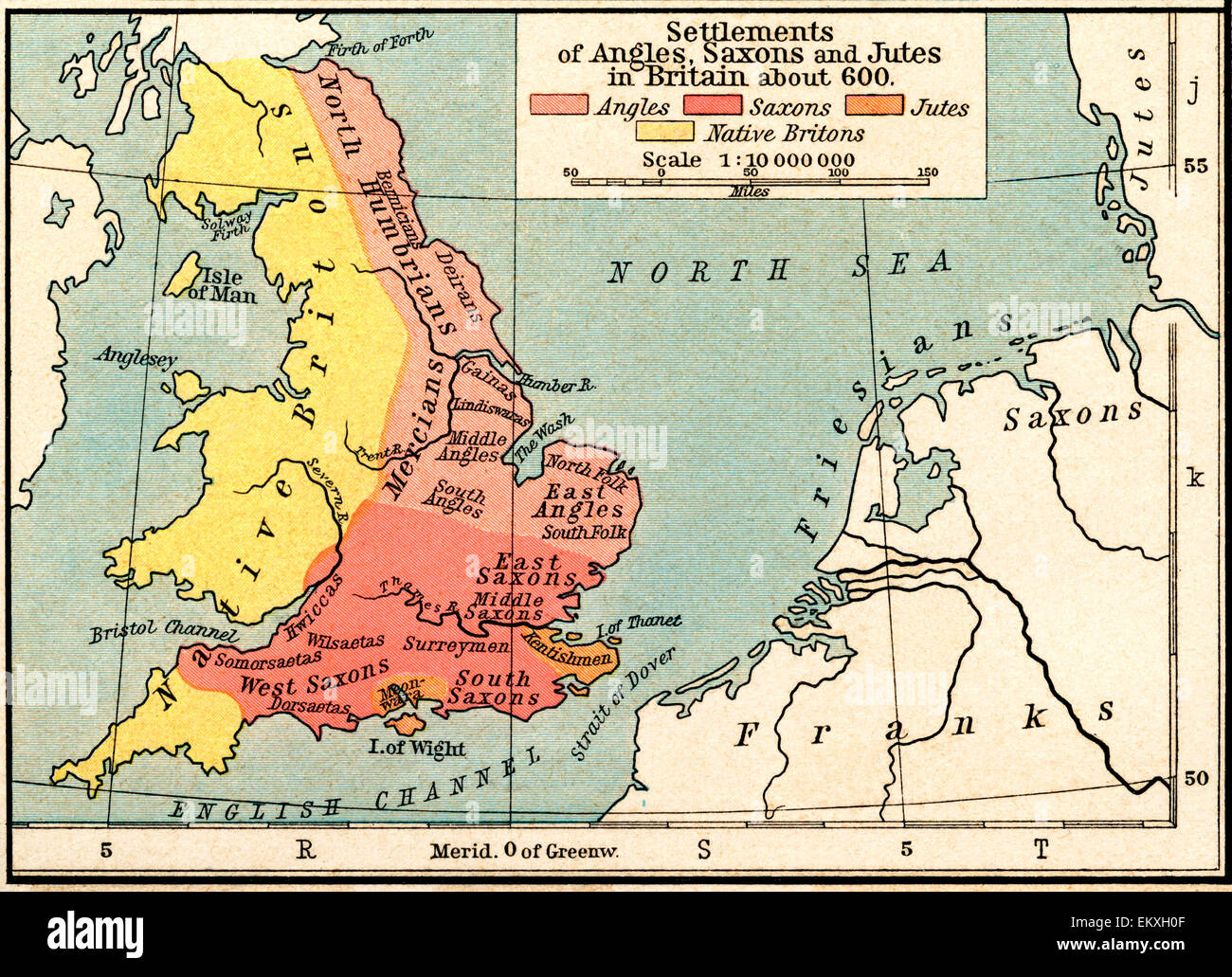
A map of the different AngloSaxon tribes in England Anglo saxon kingdoms, Saxon history

The war between Britons and Saxons, therefore, seems to have ended in some sort of compromise, which conceded a very considerable sphere of influence within Britain to the incomers. This was highly unsatisfactory from Gildas's perspective and he was both extremely hostile towards, and fearful of, the Saxons.. These differences require that.
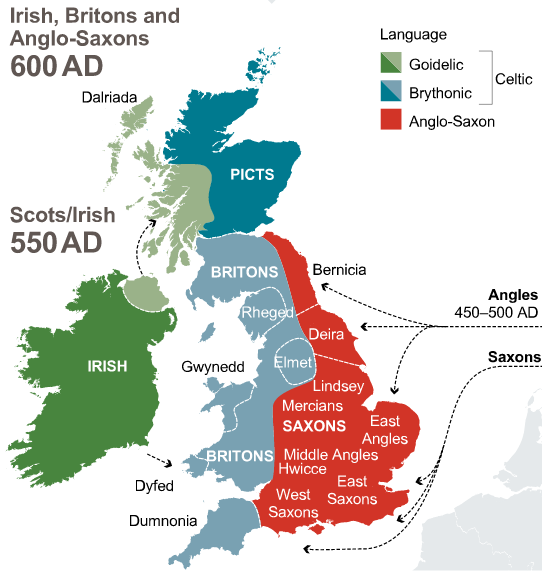
Irish, Britons, and AngloSaxons Middle Fork Baker History
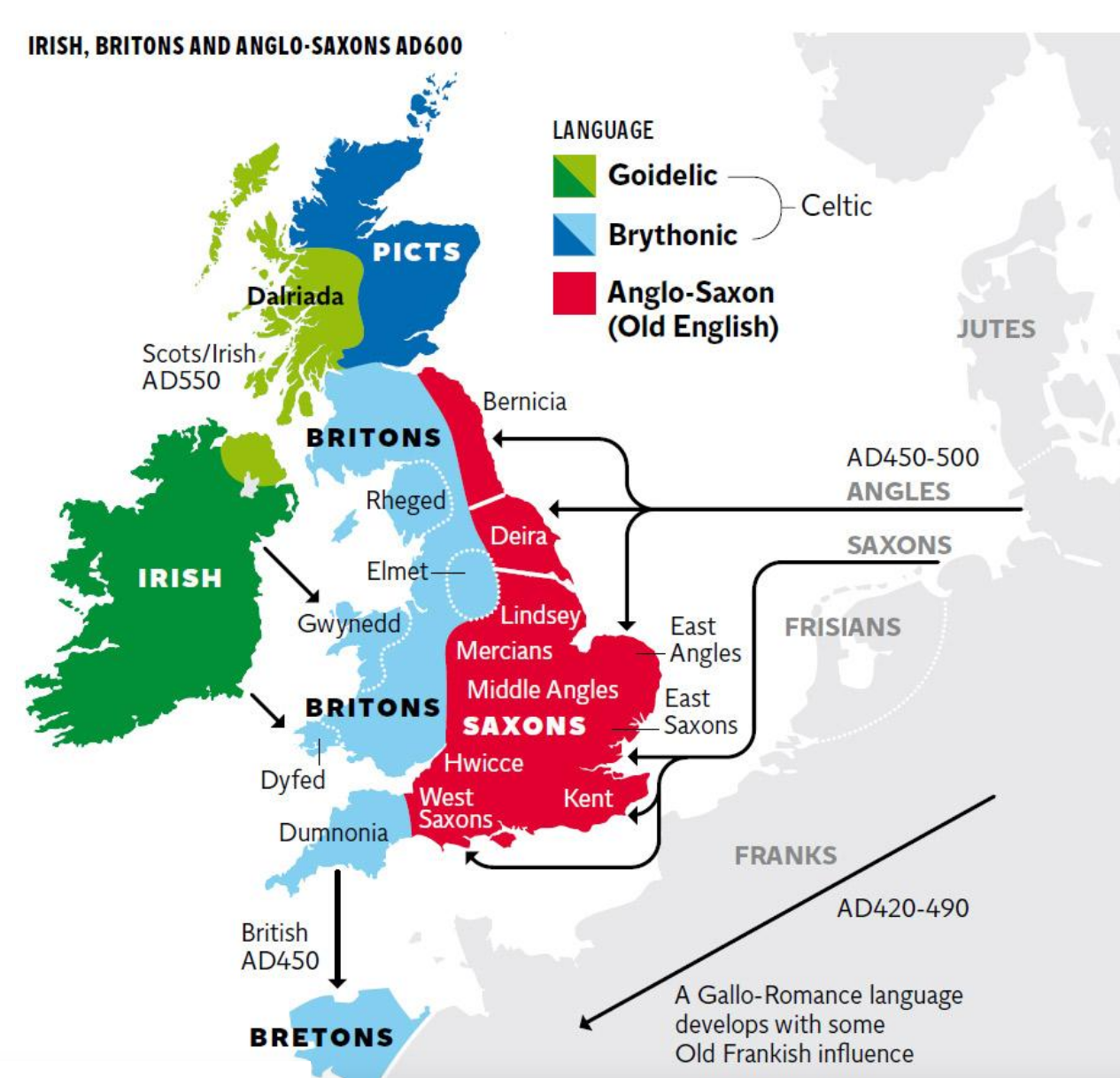
This article compares two different peoples: The Saxons and the Anglo-Saxons. The format will be as follows: 1. An explanation on who the Saxons were. 2. An explanation on who the Anglo-Saxons were. 3. A direct comparison is given, showing their similarities and differences. The SaxonsThe Saxons were a Heathen Germanic Tribe who lived in Saxony. Saxony comprised the lands of modern Northern.
New Map Shows Ancient British Divisions Linger
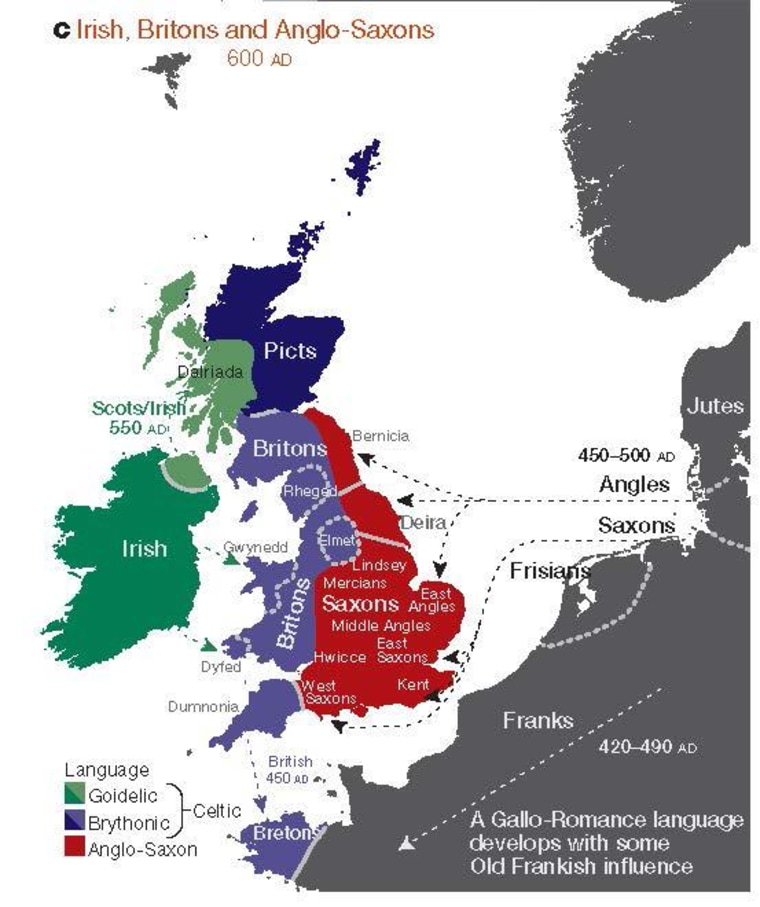
The britons and saxons were ancient tribes that clashed in england from the 5th to 11th centuries. The britons were celts who inhabited the island long before the roman invasion, while the saxons were germanic tribes who arrived in the 5th century. The britons and saxons are a unique part of english history, shrouded in mystery and legend.
10 Important Facts You Should Know About The AngloSaxons
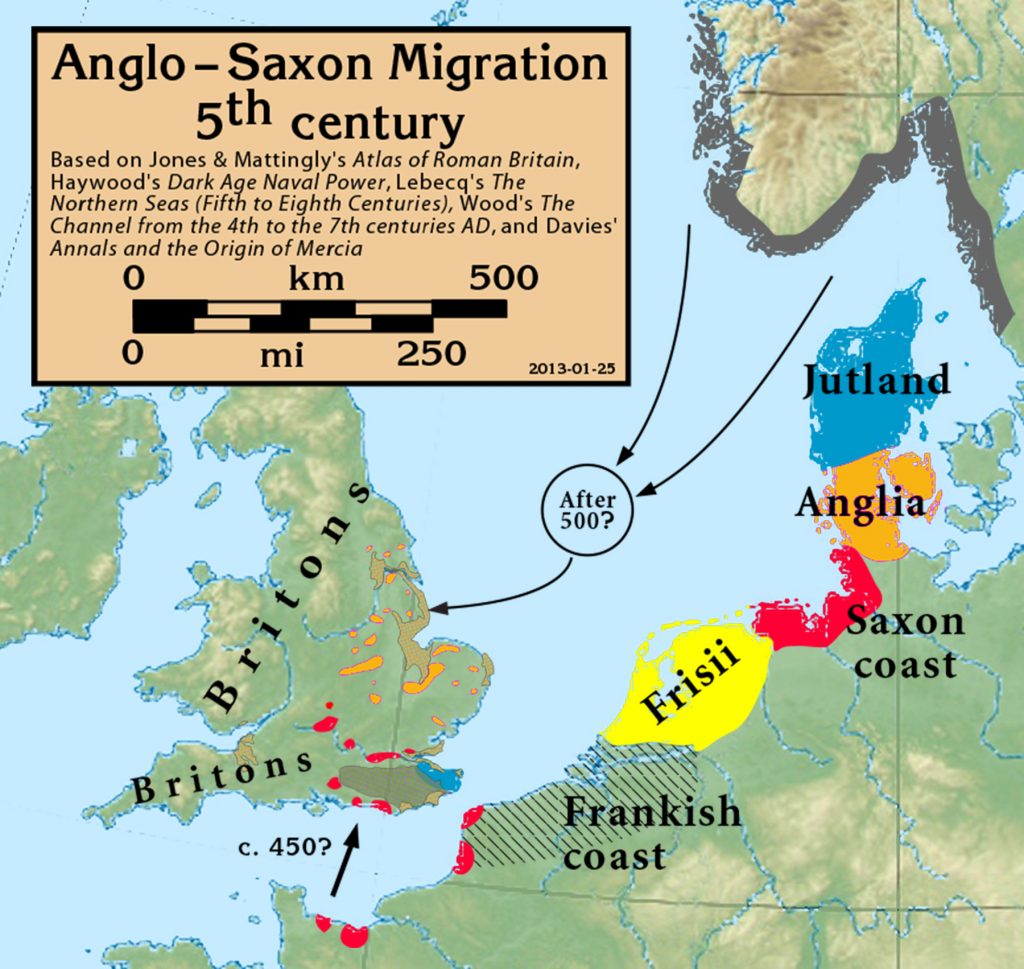
Briton, one of a people inhabiting Britain before the Anglo-Saxon invasions beginning in the 5th century ad. Although it was once thought that the Britons descended from the Celts, it is now believed that they were the indigenous population and that they remained in contact with their European neighbours through trade and other social exchanges.
Are We Saxons or Britons?? YouTube

There were many battles between Anglo-Saxons and Britons. Over time, the Anglo-Saxons took control of most of Britain. Back to top. The myth of Hengest and Horsa.
Episode 28 Angles, Saxons, Jutes and Frisians The History of English Podcast
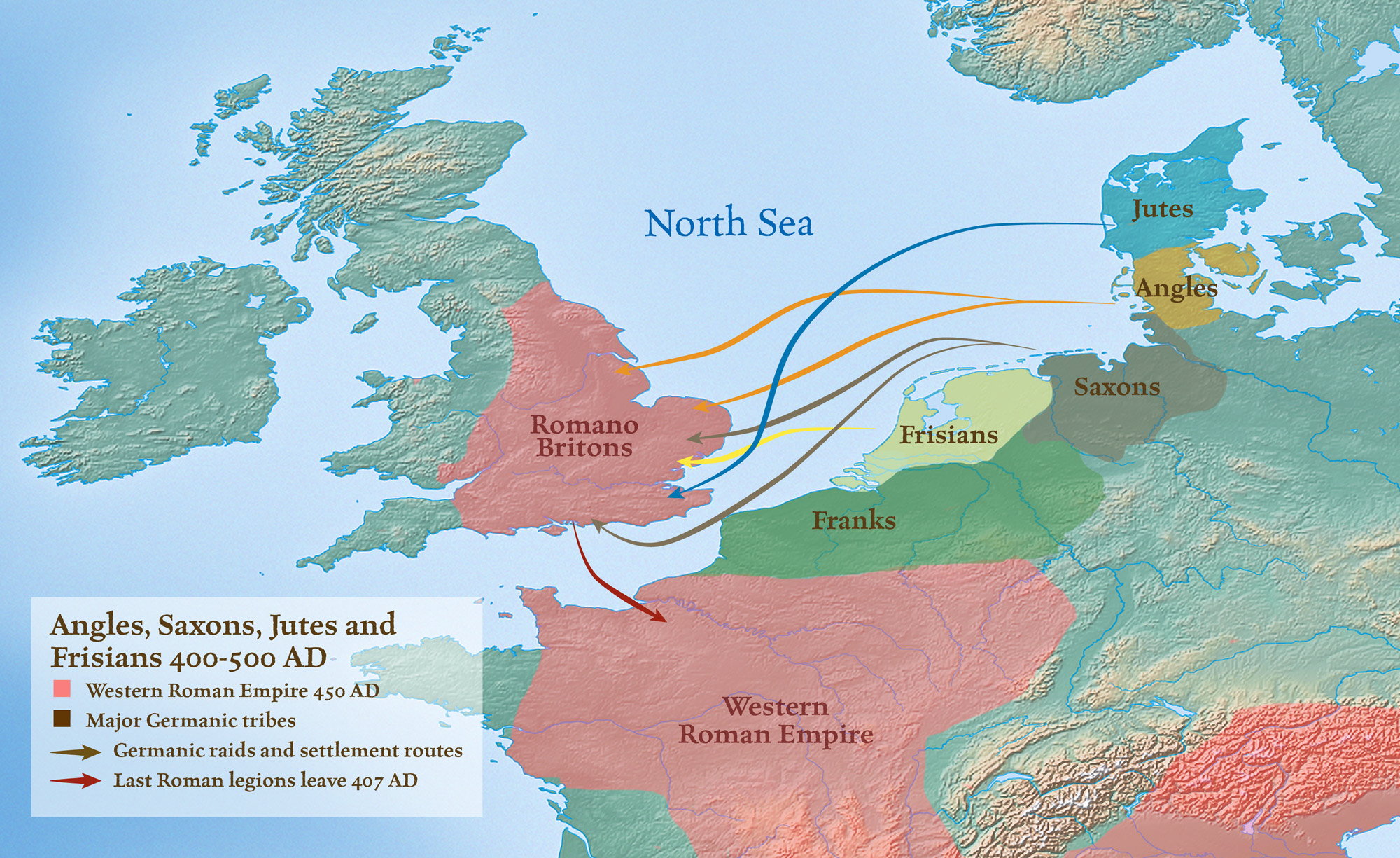
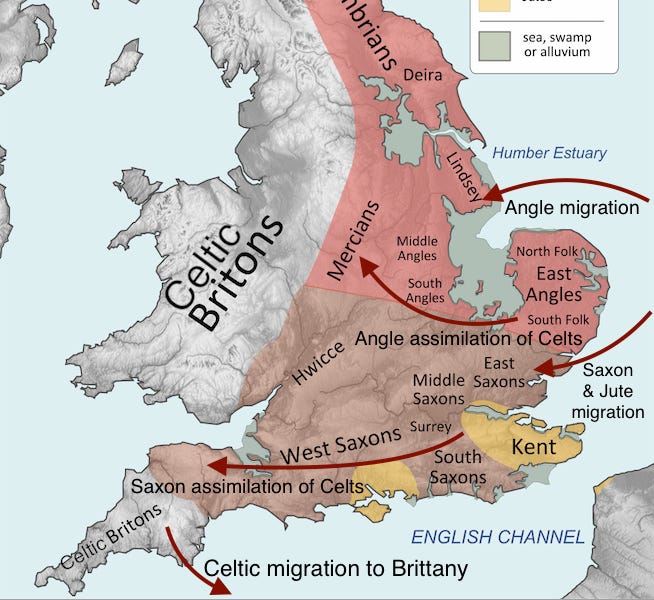
DNA study reveals fate of ancient Britons. Ancient Britons were not overrun by invading Saxons in the Dark Ages, suggests a new map based on the DNA of people from the UK and Europe. The study.
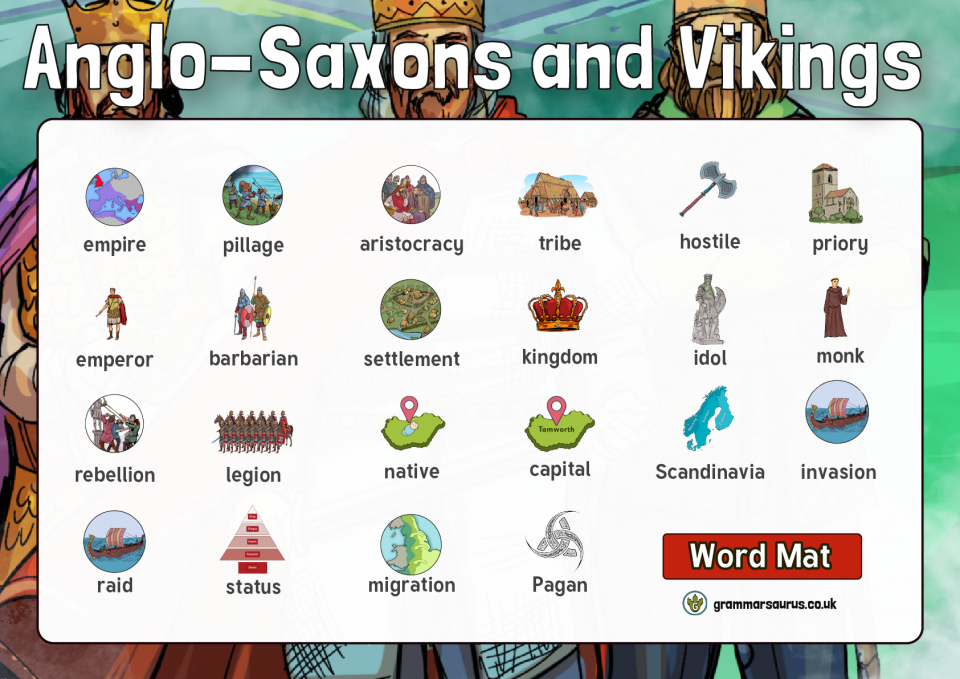
AngloSaxons and Vikings Grammarsaurus
The Britons (*Pritan. There are significant differences in artistic styles, and the greatest period of what is known as the "Insular La Tène" style, surviving mostly in metalwork, was in the century or so before the Roman conquest, and perhaps the decades after it.. However, by the early 1100s, the Anglo-Saxons and Gaels had become the.
Significance of Northumbrian Kingdom Britons and Anglo Saxons 4 YouTube

What is the difference between the English and Anglo-Saxons? English is the language, while Anglo-Saxon is the name of the people. Over time, the Saxons began referring to the Romano-British peoples as 'Wealas', meaning foreigners, which later evolved into 'Welsh'.
Are Saxons and Britons the same? Quora
The Saxons were a Germanic people of the region north of the Elbe River stretching from Holstein (in modern-day Germany) to the North Sea. The Saxons who migrated to Britain in the 5th and 6th centuries CE along with the Angles, Frisians, and Jutes came to be known as Anglo-Saxons to differentiate them from those on the continent.. The region they came from was referred to as Saxony, and their.
The AngloSaxons Fighters, Farmers and Settlers DiscoverMiddleAges Saxon history, Anglo

The difference in status between the Anglo-Saxons and Britons could have produced an incentive for a Briton to become Anglo-Saxon or at least English speaking. While most scholars currently accept a degree of population continuity from the Roman period, this view has not gone without criticism.
Angles And Saxons Map
We find Belgians in Britain, Britons in Eastern Gaul, and very many names of peoples common to both coasts; there were tribes which, though separated by the sea, yet acknowledged the same prince. Without being able to prove how far natives of the island took part in the expeditions of conquest, which pouring forth from Gaul inundated the.
The Sun Never Sets on the AngloSaxons (part 1)
Dr Simon James is Senior Lecturer in Archaeology at the University of Leicester. He specialises in Iron Age and Roman archaeology, Celtic ethnicity and the archaeology of violence and warfare. Top.
Early Briton Picts, Scotland history, Saxon history

They found that on average 25%-40% of the ancestry of modern Britons is attributable to the Anglo-Saxons. But the fraction of Saxon ancestry is greater in eastern England, closest to where the.
Bild Irishbritonsandanglosaxons.png Geschichte der Britischen Monarchie Wiki FANDOM
Archaeology has little to contribute to the processes of Anglo‐Saxon extension of influence, apart from some finds such as the Trewhiddle hoard deposited in c .869, but place‐names are more helpful. Those of Anglo‐Saxon origin stop fairly abruptly at the Tamar—further west the names are mostly British.
History of Britain The AngloSaxons and the Vikings
At a conference between the nobles of the Britons and Anglo-Saxons, [likely in AD 472, although some sources say AD 463] the latter suddenly produced concealed knives and stabbed their opposite numbers from Britain in the back. Treaty of Hengist and Horsa with Vortigern. (Photo by Universal History Archive/UIG via Getty Images)